La predisposición genética a las enfermedades es un hecho bien determinado en la actualidad. Desde los antecedentes familiares registrados en la historia clínica, es posible sospechar la presencia de ciertos rasgos que conducen a la enfermedad.

La predisposición genética a las enfermedades es un hecho bien determinado en la actualidad. Desde los antecedentes familiares registrados en la historia clínica, es posible sospechar la presencia de ciertos rasgos que conducen a la enfermedad.
La inflamación crónica ocasionada por infecciones bacterianas y virales está fuertemente relacionada con la etiología y el desarrollo de ciertos tipos de cáncer.
El análisis metagenómico de la flora intestinal permite conocer la presencia y los tipos bacterianos presentes y entender la interacción genoma-medio ambiente en eldesarrollo tumoral y en la resistencia al tratamiento, tal como se ha demostrado en diversos tipos de cáncer.

A recently published study (S. Sakata-2022) made in a japanese population, using a panel of next-generation sequencing (NGS), we examined > 300 adenocarcinomas of the lung, identified in approximately half of the cases, variants constants in the genes EGFR and KRAS, which provides useful information to study and identify variants in these genes in patients with lung adenocarcinomas.
Before deleterious mutations, the cell has an efficient repair system through the pathway Repair by Homologous Recombination (HRR), which allows you to repair mutations of the double-stranded, by activating a complex molecular mechanism that includes a team of genes, within which are found mainly BRCA1/2, ATM, PALB2, and RAD51; however, when there is a mutation in any of the genes of this pathway, is set to a Deficiency in the Homologous Recombination (HRD).
It has been estimated that the DNA suffers more than 10,000 variations on a daily basis as a result of errors in the replication, errors in the repair or absence of the same.
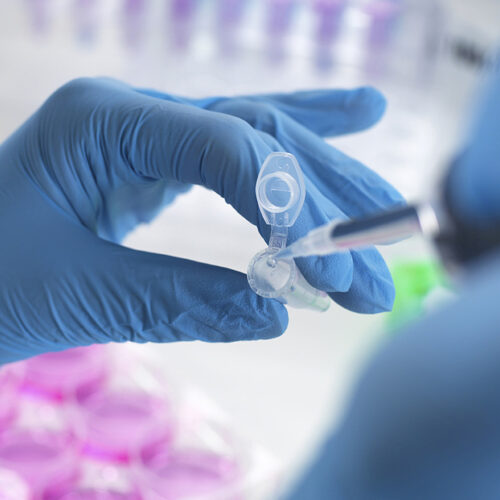
The chronic inflammation caused by bacterial and viral infections is strongly related to the etiology and the development of cancer, not only because of the inflammation caused by the infection, but by the integration of sequences of DNA and RNA in human cells.
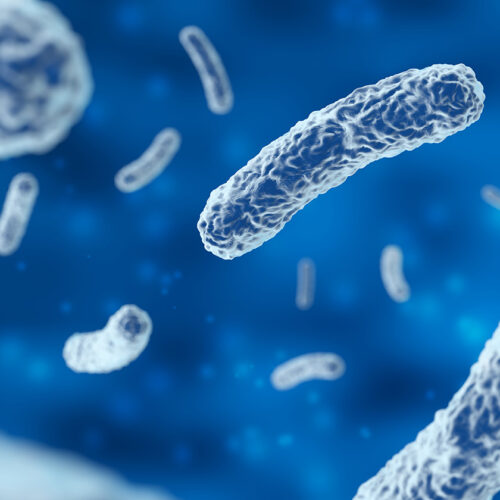
The chronic inflammation caused by bacterial and viral infections is strongly related to the etiology and the development of cancer, not only because of the inflammation caused by the infection, but by the integration of sequences of DNA and RNA in human cells.